Breakfalls
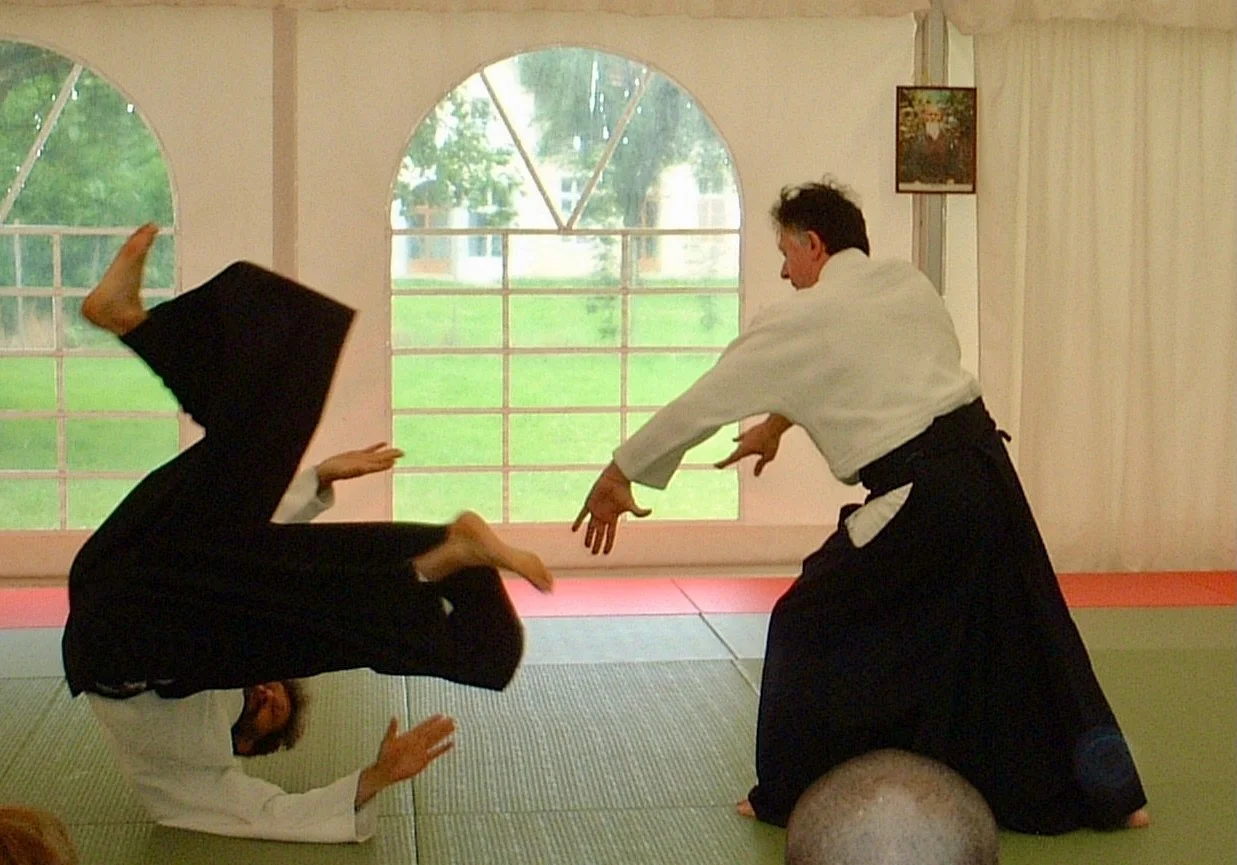
Uke, on the left, "receiving" a throw by executing a forward roll. Wikipedia.
In my 20s and 30s whilst training in Karate and Taekwondo, I don’t ever remember being taught how to fall safely, but I picked up a trick or two by osmosis that will work in a training hall with a nice padded floor.
So, what’s a breakfall? From Wikipedia in an entry referring to Japanese martials (aikido, judo etc.) on uke, and using a bit of license to swap out the term breakfalls for ukemi and ‘breakfallee’ for uke…
Correct ukemi will allow the uke to suffer the least amount of damage possible from a fall. If done correctly, the force of hitting the ground will be spread out along non-critical parts of the uke's body. By properly doing ukemi, the uke can roll out of danger and move into their next course of action without being damaged too much by hitting the ground.
I don’t remember the last time I had the confidence to even attempt a forward roll. With a tricky shoulder, hip and knee, I worry something is going to pop out and see me in an emergency room followed by a long rehabilitation.
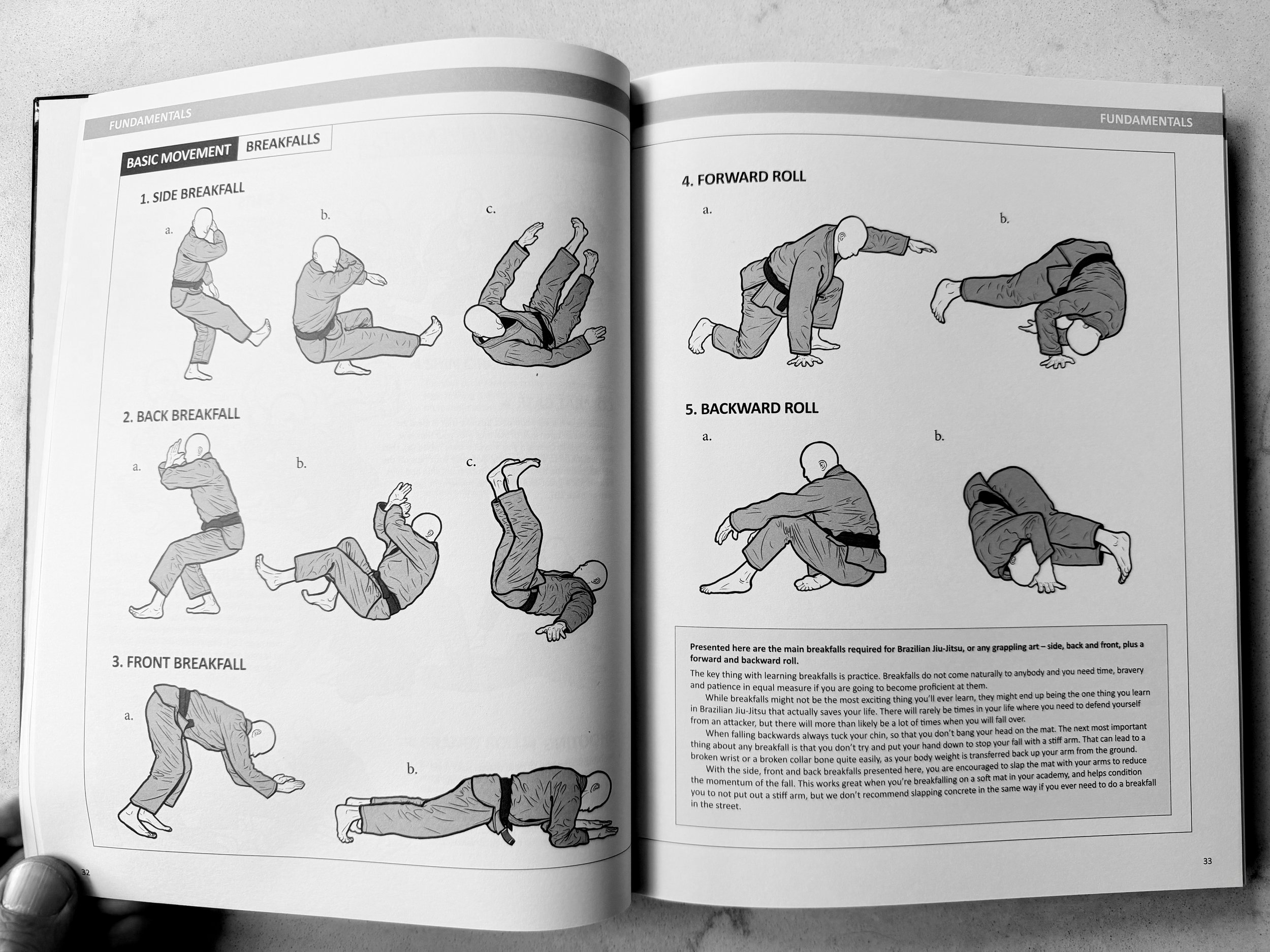
From Brazilian Jiu-Jitsu, The Ultimate Illustrated Guidebook, Seymour Yang and Graham Barlow, 2025, Independent Publishing Network. With kind permission of the authors.
Whilst I practice the soft and gentle art of Tai Chi, sometimes more advanced training involves partner work with coordinated attack and defence moves. I have come a cropper a couple of times and found the most risky move for me is when I am throwing a (terrible!) roundhouse kick, and the defender catches it and lifts, or steps in trapping my supporting leg and pushes me over.
In training, we want the defender to practice the move and give them a sporting chance of catching your leg and responding. In a ‘real fight’ we are trying to avoid this at all costs. The fine line is then, in this training scenario, what does the defender do with your captured leg? You are at their mercy. Under the right conditions, I think it is good to be able to take your opponent carefully to the ground. The person applying the technique gets to play it all the way through, and the ‘victim’ gets some conditioning in a controlled setting.
It’s probably wise to agree some ground rules up front in these kinds of partner exercises, and they should take into account the environment - hard floor or mats? Are you both conversant with breakfalls? What injuries do you have?
As is my habit, I turned to YouTube and Jesse Enkamp, the ‘Karate Nerd’ to see if he has anything on this topic. I should not have been surprised to find that he has an excellent piece here…
A quick scout around and you will find a lot of material on the topic from a wide range of martial arts. Here’s one from Korean Hapkido that includes a jumping breakfall…
I thought I’d also check out my copy of the beautiful new book from Seymour Yang Meerkatsu) and Graham Barlow (The Taichi Notebook) - Brazilian Jiu-Jitsu, The Ultimate Illustrated Guidebook (currently out of stock). They have a short section in the fundamentals covering Side, Back and Front breakfalls, and forward and backward rolls.
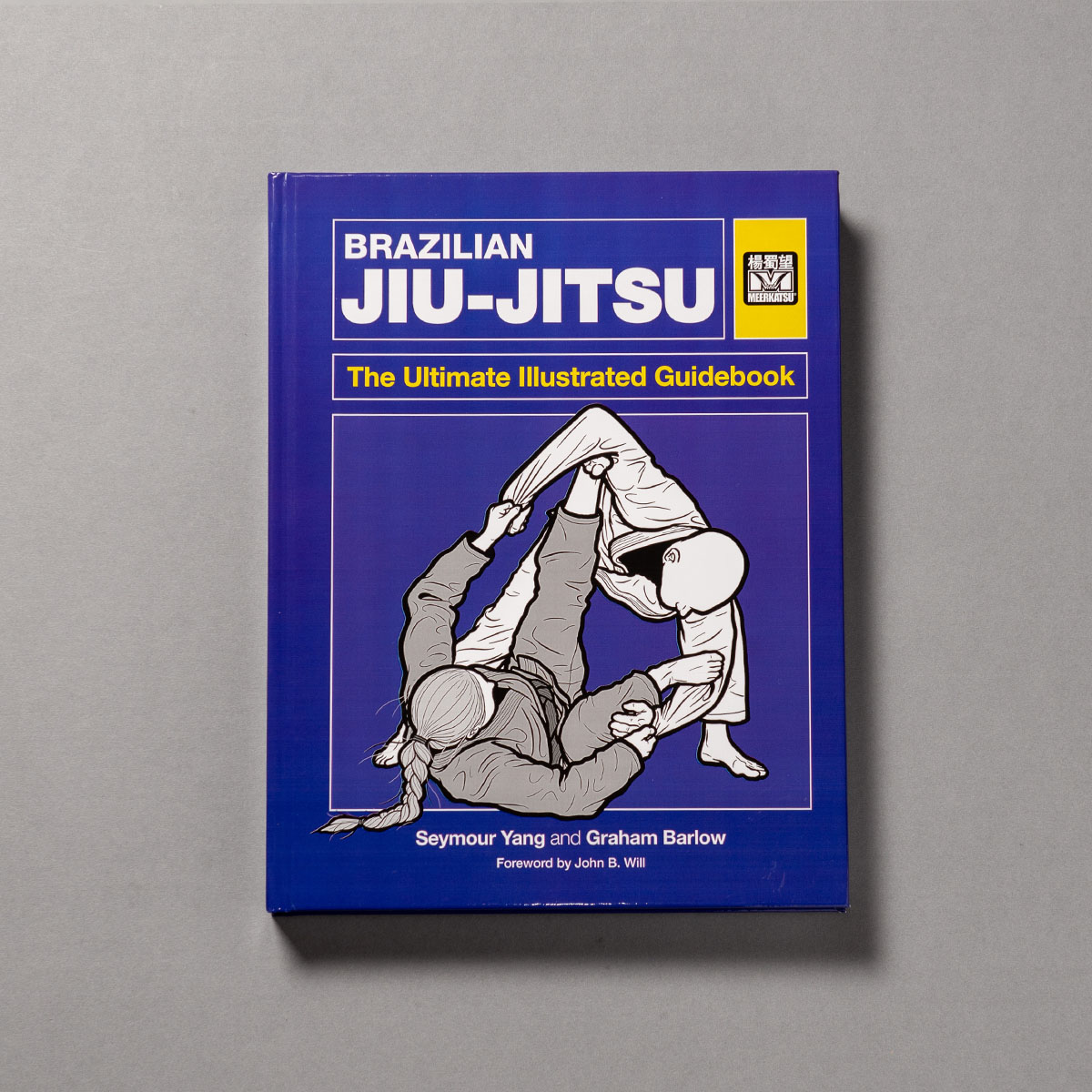
If you can get your hands on a copy, do it!
As we got older, falling badly is something we really want to avoid.
I guess I need to figure a way of introducing more practicing of falling into my training.
Extra Links
Credits
Featured Image: Bulgarian Hazard Sign
Revisions
15-Dec-2025: added the picture from Brazilian Jiu-Jitsu, The Ultimate Illustrated Guidebook