Stances
Introduction
In teaching new students I am continuously reminded that the stances in Taiji can be hard to get at first.
Maybe they are not strange to dancers, fencers, boxers and other athletes, and they are definitely not foreign to martial artists. ‘Refugees’ from other martial arts come to taiji classes well versed in stances, and they can see the differences and understand their importance.
For example, in my typical qigong ‘warm up’ (Eight Pieces of Brocade), three of the moves use the horse stance (mǎbù (馬步) in Chinese, kiba-dachi (騎馬立ち) (or shiko-dachi (四股立)) in Japanese, and juchum seogi (주춤 서기) or annun seogi (lit. sitting stance) in Korean - Wikipedia). This is really excellent strength training for the legs.
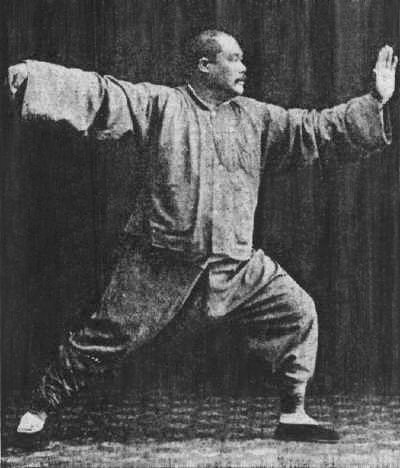
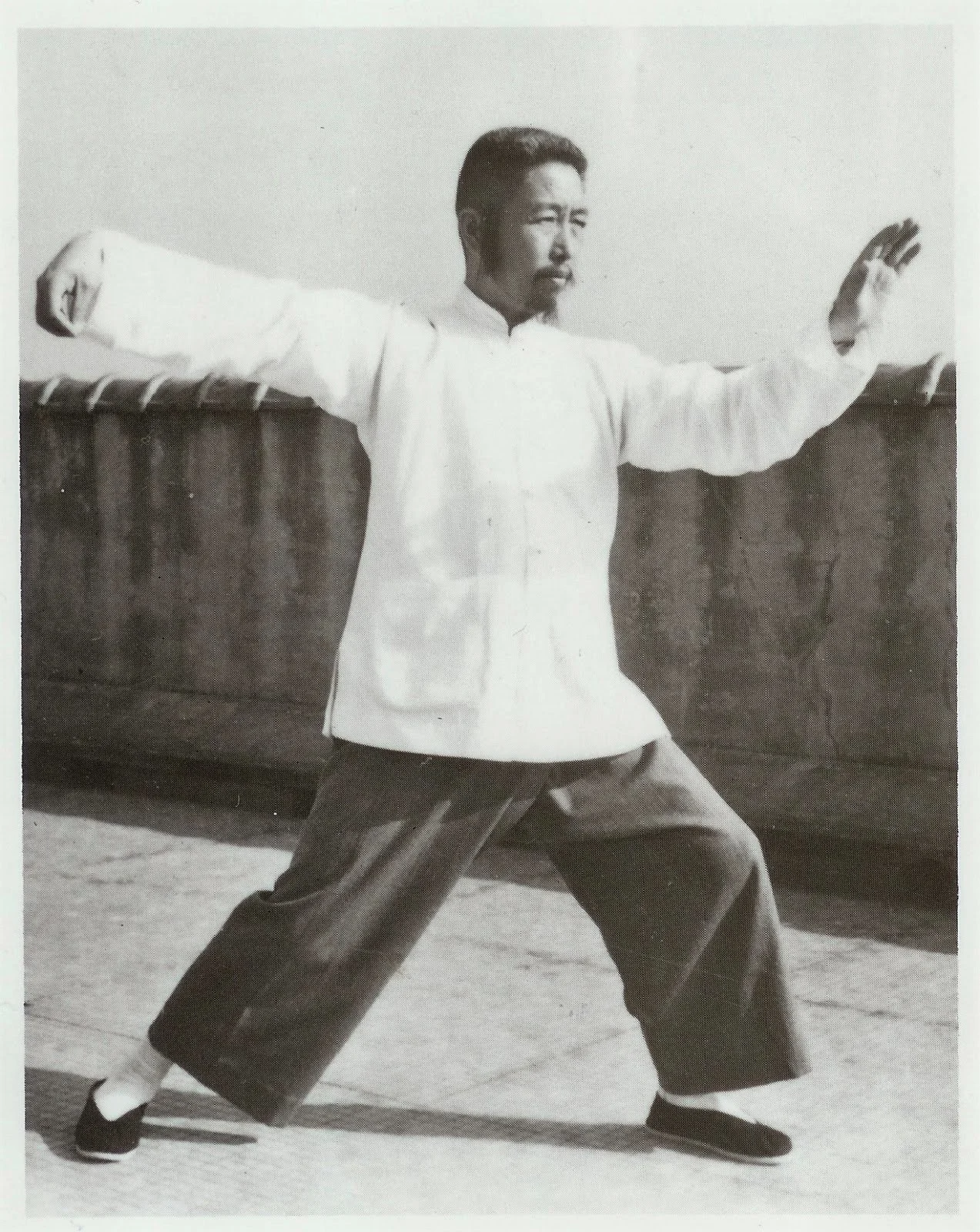
The first form we teach is Cheng Man-ch’ing’s shortened derivation of the Yang family form. It is supposedly notably different from the Yang original in that it is a shorter stance.
But looking at the pictures above there is not a lot in it - at least in the Single Whip stance!
When stepping forward, I would also say the stance is compact compared to the Shukokai karate, and even more so, the Taekwondo stances that I practiced in my youth.
Width vs. Length
The guidance I was given, and that I in turn pass on to my students, is that we step out into a shoulder width stance, and step forward into a stance the same length as your shoulder width.
Essentially the stance is square. It has the same width as it has length.
If you step forward with the left foot, the heel drops onto the top left corner of an imaginary square. The right foot turns out at 45 degrees with the heel on the bottom right corner of the square.
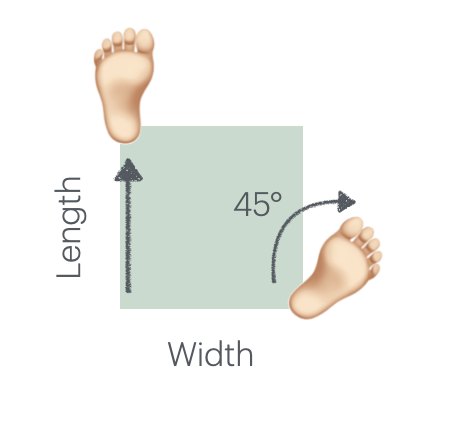
Stepping forward into a shoulder width stance, the right foot pivots out to 45°. Importantly, the width and length are the same.
The aspect that some students seem to need most support with is keeping the width of the stance. They slip into a narrow ‘tight-rope walking’ stance, with the heels in-line.
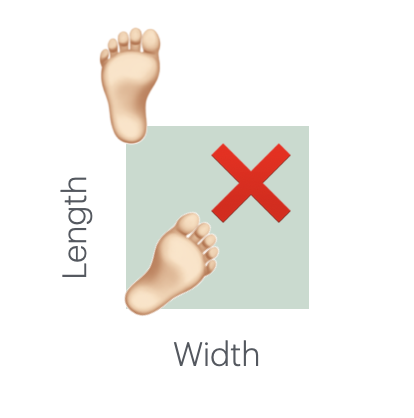
‘Tightrope walking’. Don’t do this.
To further re-enforce the discipline of keeping a wide stance I ask students to visualise whether they could roll a football between their legs (back to front, and even left to right).
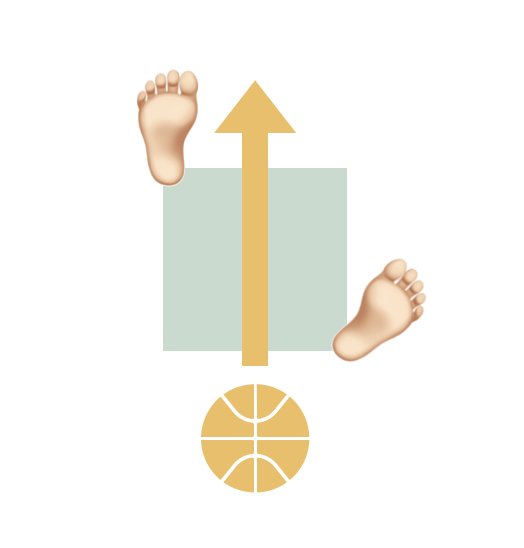
I used to teach at a gym that often had exercise balls lying around. It was easy to show this concept in practice.
How do find your shoulder width other than measuring it?
I was taught that starting with feet together, you can pop your toes out as far as they will go and then swing the heels out to finish with the feet parallel. Once you have the measure of it, you will learn to step automatically to this width.
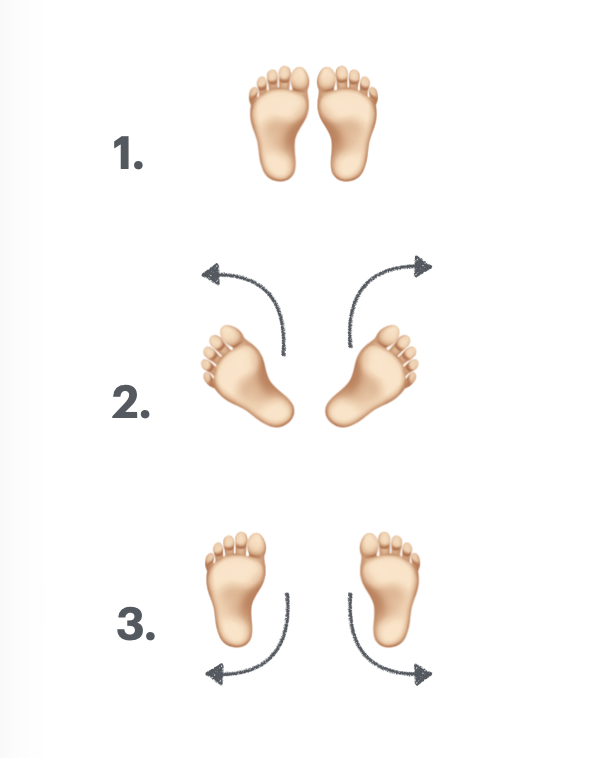
Start with feet together, pop the toes out then the heels. Works the other way around too!
In Practice
In the years I have been learning and teaching I have never done this until this week. I cut out a square of cardboard that was supposed to be as wide as my shoulders, only the box was not big enough so it is 9 cm (~3.5”) narrower.
Even this size felt quite wide, so I am going to give my students a break if they don’t maintain full shoulder width.
It’s also given me some confidence to lengthen my stance a little, a Taekwondo habit I was trying to break.
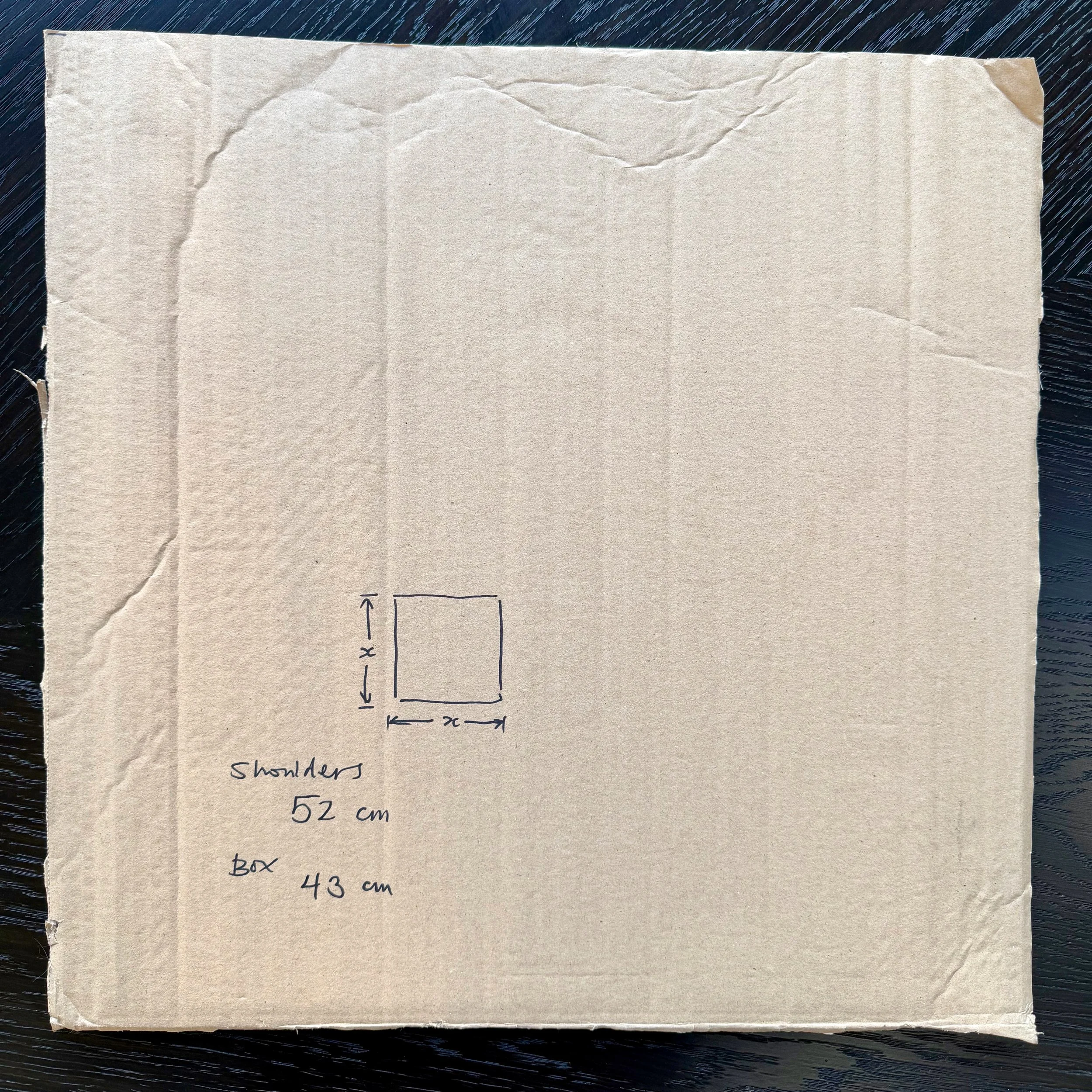
I decided to nerd out completely 🤓.
My cardboard ‘stepping template’.
Taichi Walking
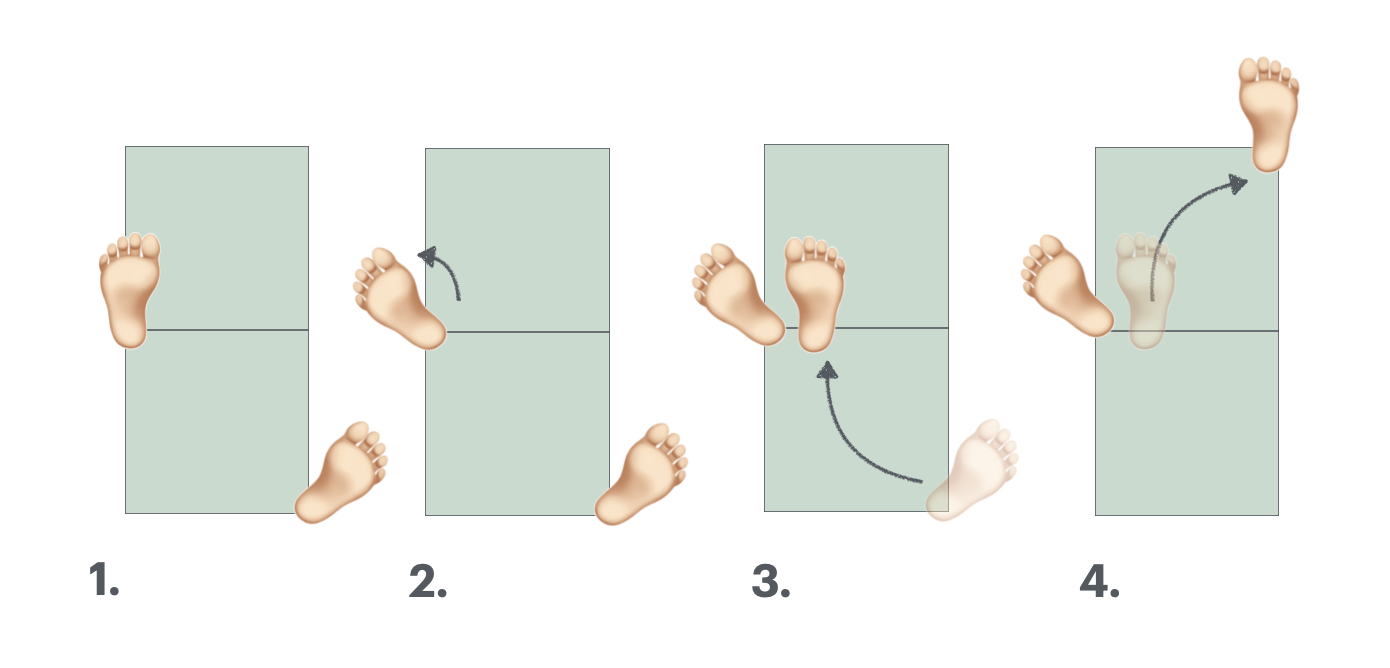
The green squares are the width x length of your shoulder width. The foot moves in a crescent moon shaped arc.
When stepping, keep the knees bent and the weight ‘sunk’ into the ground:
Start
Turn out the front foot to 45°
Load all the weight onto the front foot and bring the rear foot forward and next to the front foot.
If you want to pause and touch your toes to the floor at this point to get your balance, you can do so.
With time, improved balance and confidence, you won’t need to do this
Swing the moving (was rear) foot out to shoulder width and drop it heel first, one shoulder width in front of the (now) rear foot
When stepping (3. and 4.) the stepping foot makes an arc or crescent shape, swinging in and then back out to preserve the required width.
With time, the arc or crescent shape may soften and smooth out so that the foot effectively moves straight forward.
Key Takeaway
The stance should be shoulder width, and when stepping, shoulder ‘length’.
Other styles of Taichi
You will know that taiji comes in several ‘flavours’ or family styles and the stances do vary. Later in the Wutan syllabus we learn Chen style and their stances are famously longer and lower, and very athletic and powerful.
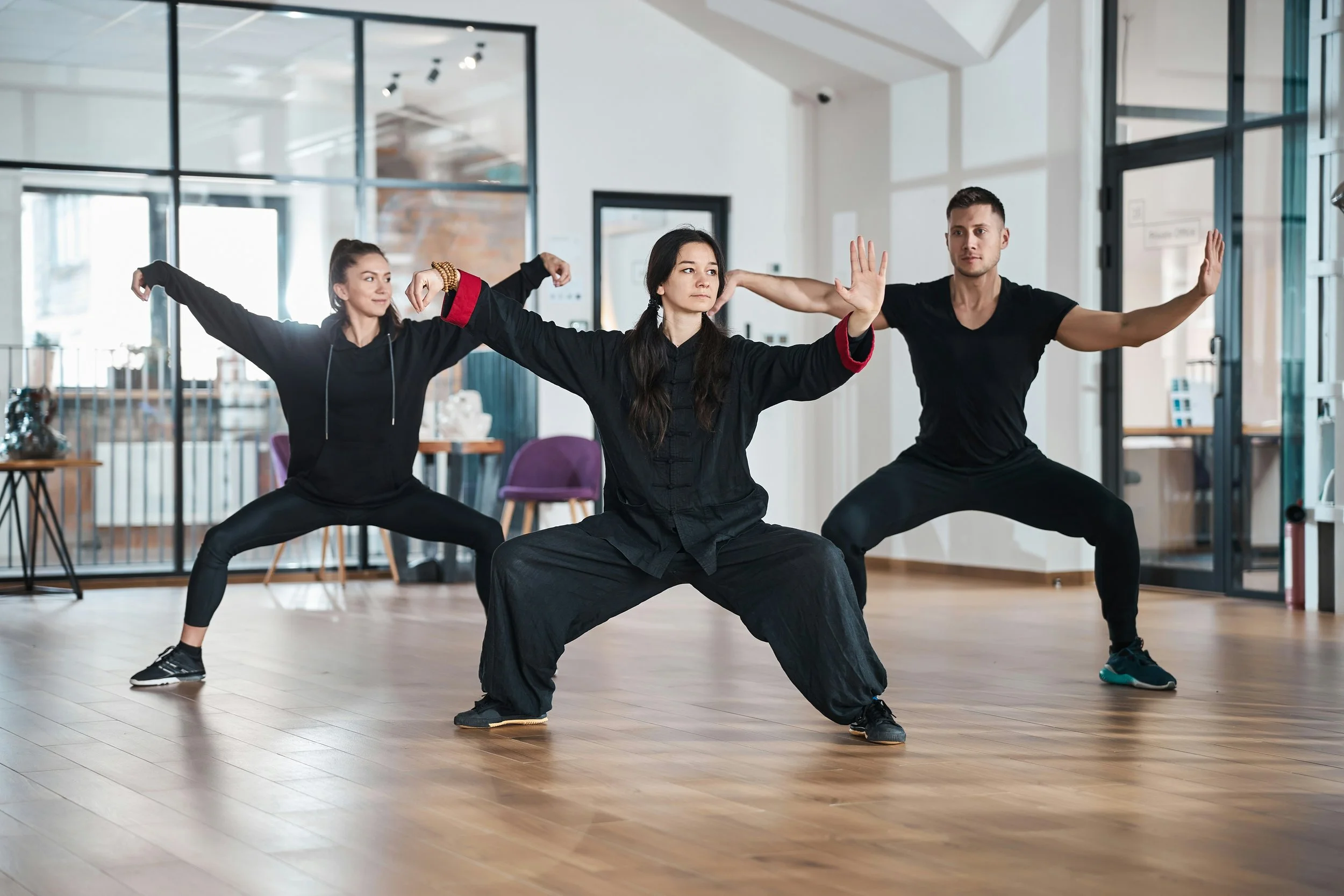
Chen style Single Whip stance. Interestingly. the lady on the left is sporting two ‘bird’s beak’ hands.
Image licensed under the Unsplash+ License.
Footnotes
⚠️ I have been hesitating from calling this short, square stance a ‘bow stance’ (gong bu), a term used in Kung Fu, although I have used this term in the past. The bow stance is very definitely a long stance and very narrow, with the heels in line, very different to what I am going for here!
The focus of this article has been about stances and stepping forward. I have not covered stepping backward, or some of the big 270° turns we make, where it is completely acceptable to be much narrower than shoulder width.